
Why Temporary Living Plans Matter During a Custom Home Build
Building a custom home is a major milestone for any family. It also requires a practical plan for where you will live while construction is underway. Whether you are building on a new lot, replacing an existing home, or coordinating a major addition with home remodeling, temporary housing can affect your daily schedule, budget, school routines, pet care, storage, and communication with your Portland general contractor.
A thoughtful temporary living plan helps reduce stress, protect your belongings, and keep the project moving with fewer interruptions. For families in Portland OR and Multnomah County, planning early is especially important because permitting, inspections, weather, site access, and material schedules can influence the overall construction timeline.
Start With the Build Timeline and Key Milestones
Before choosing temporary housing, ask your design-build team for a realistic overview of the project phases. While timelines vary by scope, property conditions, permitting, selections, and inspection requirements, your contractor should be able to explain the major milestones and decision points.
Important timeline details to discuss
- Permitting expectations: Confirm what approvals are needed before construction can begin.
- Site preparation: Understand when access to the property may become limited.
- Utility interruptions: Ask whether water, power, gas, or internet service will be unavailable during any phase.
- Interior finish timing: Flooring, cabinetry, tile, and paint may affect when the home is suitable for move-in.
- Final inspections: Move-in may depend on required approvals and completion of safety-related items.
Good project oversight helps families understand what is happening next and when decisions are needed. This is one reason many homeowners choose a design-build approach for custom homes, additions, and remodeling projects.
Compare Temporary Housing Options for Your Family
The right housing plan depends on your family size, school or work location, pets, accessibility needs, and how long you expect to be away from the property. It is helpful to compare options before construction starts so you are not making rushed decisions later.
Common temporary living options
- Short-term rental: A furnished rental can be a strong fit for families who need space, a kitchen, and a predictable routine.
- Extended-stay lodging: This can work for shorter phases or smaller households that need basic amenities and flexible dates.
- Staying with family or friends: This may offer convenience, but it is important to set expectations about timing, privacy, parking, and pets.
- Rental home or apartment lease: A longer lease may be practical for larger custom homes or projects with extensive permitting and construction needs.
- Living in part of the home: For some remodels or additions, limited occupancy may be possible, but only if the site remains safe and essential utilities are available.
For ground-up custom homes, families typically need to live elsewhere for the duration of active construction. For additions or home remodeling, your licensed contractor can help assess whether phased work is practical or whether off-site housing is the safer and more efficient choice.
Plan Around Children, School, and Daily Routines
Families often focus on construction details first, but daily life needs just as much planning. Children may need consistency with school, transportation, meals, homework, and bedtime routines. A temporary living location that looks convenient on paper may be difficult if it adds long commutes or disrupts childcare.
Family routine planning tips
- Map the commute to school, work, childcare, and regular activities before committing to a rental.
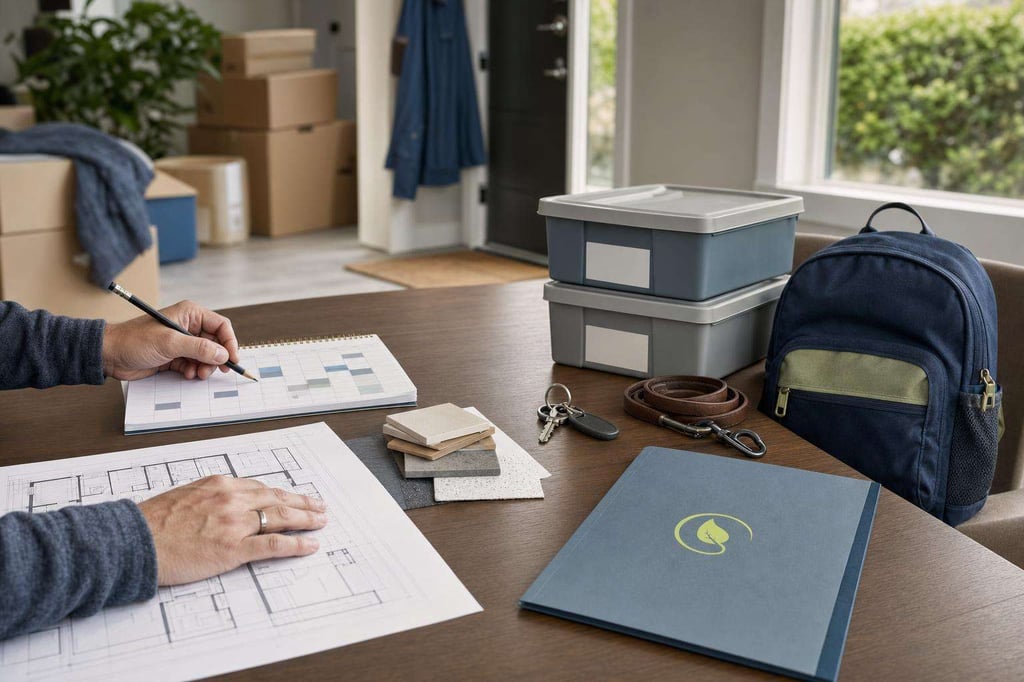
- Pack a dedicated school and activity bin with backpacks, supplies, sports gear, and seasonal clothing.
- Keep important documents, medications, chargers, and daily essentials in an accessible place.
- Set up a simple family calendar for contractor meetings, selections deadlines, inspections, and move-related tasks.
- Talk with children about the process in age-appropriate terms so they know what to expect.
A custom home build can be exciting for kids when the process feels organized. Regular updates, safe site visits when approved by the contractor, and visible progress can help the family stay connected to the future home.
Decide What to Store, Move, or Keep Accessible
Storage is one of the most overlooked parts of a temporary living plan. Families often need to separate belongings into three categories: items needed every day, items needed occasionally, and items that can remain packed until move-in.
Storage considerations before construction
- Protect valuable items: Move heirlooms, documents, electronics, and delicate furniture to a secure, climate-appropriate location.
- Label clearly: Use room names and priority labels so unpacking is easier when the home is complete.
- Keep selections handy: Store samples, finish notes, appliance information, and design documents where you can access them quickly.
- Plan for seasonal needs: Portland weather can shift throughout the project, so keep rain gear, coats, and seasonal clothing available.
- Coordinate deliveries: Ask your contractor before sending materials, furniture, or appliances to the jobsite.
Your general contractor should control site access and coordinate deliveries to support safety, scheduling, and quality control.
Make a Pet and Vehicle Plan
Pets and vehicles need attention before construction begins. Job sites include equipment, materials, open areas, noise, and workers moving throughout the property. Even friendly pets should not be on an active construction site unless your contractor has specifically approved a safe arrangement.
Questions to answer in advance
- Will your temporary housing allow pets?
- Do pets need updated boarding, daycare, or veterinary arrangements?
- Where will vehicles be parked during site preparation and construction?
- Will trailers, storage containers, or construction vehicles need driveway or street access?
- Are there neighborhood parking restrictions or access requirements to consider?
Clear planning helps reduce disruptions for your family, neighbors, and the construction team.
Coordinate Communication With Your Contractor
When you are living away from the property, communication becomes even more important. A professional design-build team should provide a clear process for updates, questions, approvals, and site visits.
Communication practices that help
- Choose one primary decision-maker or define how joint decisions will be approved.
- Schedule regular check-ins for progress, selections, and upcoming milestones.
- Ask how change requests will be documented and priced before work proceeds.
- Clarify when homeowners may visit the site and what safety rules apply.
- Keep permitting, plan updates, and project documents organized in one shared location.
Strong communication supports better project oversight and helps families feel informed throughout the construction process.
Budget for Temporary Living as Part of the Overall Project
Temporary housing should be considered part of the overall planning process for custom homes, additions, and major home remodeling. Costs may include rent, deposits, utilities, storage, moving services, pet care, additional commuting, and duplicate household items.
Because every family and project is different, avoid relying on assumptions. Instead, build a temporary living category into your planning conversations early and revisit it as the construction schedule becomes more defined.
Prepare for Move-Out and Move-In With a Checklist
A checklist can make the transition smoother before construction starts and again when the home is ready for occupancy.
Before construction begins
- Confirm your temporary address and mail forwarding.
- Update school, work, medical, and delivery information as needed.
- Photograph belongings before moving or storage.
- Remove personal items from areas included in the scope of work.
- Confirm site access, keys, security, and utility plans with your contractor.
Before moving back in
- Confirm required inspections and occupancy-related items with your contractor.
- Review any homeowner orientation details for new systems, appliances, and finishes.
- Schedule movers after the contractor confirms appropriate timing.
- Keep a list of questions for the final walkthrough.
- Organize warranty documents, maintenance information, and finish records.
Work With a Detail-Oriented Portland General Contractor
Temporary living plans are easier when your construction team communicates clearly, manages the schedule carefully, and understands how construction decisions affect family life. Portland General Construction provides construction services for design-build projects, custom homes, remodeling, additions, and commercial construction in the Portland area.
Whether you are planning a new home or a major renovation, early coordination can help align your housing plan with permitting, project oversight, site access, and construction milestones. Always verify licensing and project details prior to engagement.
Ready to Plan Your Custom Home Build?
Portland General Construction can help you understand the construction process and prepare for the practical steps ahead. Contact us today to start your construction project. For practical next steps, View details and talk with the team about timing, scope, and the right path for your situation.
Frequently Asked Questions
Start discussing temporary housing as early as possible, ideally during preconstruction planning. Your contractor can help you understand likely construction phases, permitting considerations, site access needs, and when the home may not be safe or practical to occupy.
It depends on the scope of work, utility availability, safety conditions, and access needs. Some additions or phased remodeling projects may allow limited occupancy, while others require the family to live elsewhere. Ask your licensed contractor to review the project plan, safety concerns, and schedule before making a decision.
Keep daily essentials, medications, school supplies, work items, pet supplies, key documents, finish selections, and contractor communication records easy to access. Store less-used belongings separately and label boxes clearly by room and priority.
Site visits should be coordinated with your contractor. Active construction areas can present safety concerns, so visits are typically scheduled around key milestones, walkthroughs, or decision points. Always follow site access rules and avoid unscheduled visits.
Choose temporary housing that supports school, work, pet care, and daily routines. Maintain a family calendar, keep essential items organized, and communicate upcoming changes in advance. For pets, confirm housing rules, boarding options, and transportation plans before construction begins.