
Smart Site Planning Comes Before a Smart Custom Home
Building a custom home in Portland OR starts long before framing begins. The property itself shapes the design, budget, timeline, and permitting path. Slope, driveway access, stormwater management, utility connections, and neighborhood constraints can all influence what is practical to build and how the work should be sequenced.
For homeowners in Portland and Multnomah County, working with a Portland general contractor early in the planning process can help identify site conditions that may affect design decisions. A design-build approach can also connect planning, estimating, permitting, and construction services under one coordinated process.
Evaluating Slope and Buildable Area
Portland’s varied terrain can create beautiful custom home opportunities, but sloped lots require careful evaluation. A hillside or uneven site may affect foundation design, excavation, drainage, retaining walls, vehicle access, and long-term maintenance.
Understand the Natural Grade
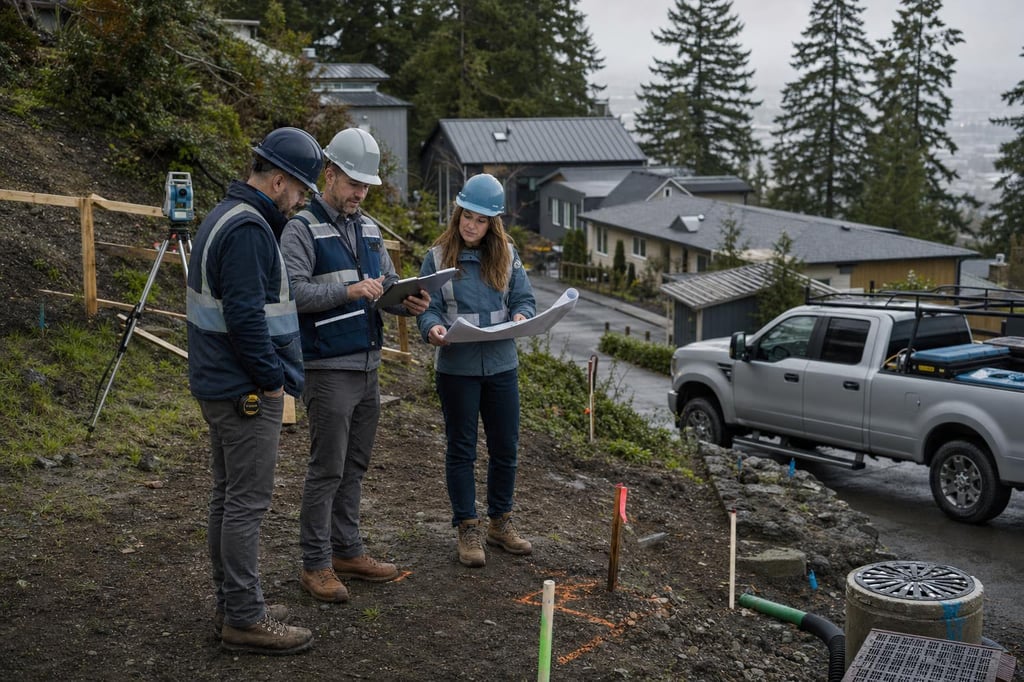
Before design plans are finalized, the project team should understand how the land rises, falls, and drains. A site survey and professional evaluation can help clarify:
- Approximate buildable area and setbacks
- Elevation changes across the property
- Potential grading or excavation needs
- Drainage patterns during wet weather
- Tree locations, root zones, and site constraints
These details help the design team decide whether the home should step with the slope, use a daylight basement, require retaining structures, or rely on another foundation strategy.
Plan for Drainage and Stormwater
Drainage is especially important in the Portland climate. Water should be directed away from the foundation, neighboring properties, and unstable slopes. Depending on the property, stormwater planning may involve roof drainage, area drains, infiltration systems, swales, or other approved methods.
Because stormwater rules can vary by jurisdiction and site condition, permitting review is a key part of early planning. A licensed contractor and qualified design professionals can help coordinate the right information for review.
Consider Foundation and Retaining Wall Needs
Sloped properties often require more structural coordination than level lots. Foundation depth, soil conditions, engineered retaining walls, waterproofing, and access for excavation equipment should be discussed early. This helps reduce surprises after design work is already underway.
Confirming Access for Construction and Daily Use
Access is not just about the finished driveway. During construction, crews, equipment, material deliveries, inspectors, and utility providers need safe and practical access to the site. If access is limited, project oversight becomes even more important.
Construction Access
A thoughtful access plan should consider:
- Where trucks can safely enter, turn around, and stage materials
- Whether the street width or slope limits delivery options
- Temporary erosion control and site protection
- Neighboring driveways, sidewalks, and right-of-way impacts
- Space for dumpsters, portable facilities, and equipment
On tighter Portland infill lots, staging can be a major planning item. Early coordination helps avoid conflicts once construction begins.
Finished Driveway and Long-Term Use
The driveway should work for daily life as well as code requirements. Grade, visibility, drainage, parking, garage location, and emergency access may all affect the final layout. On sloped sites, driveway design can influence the home’s elevation, entry location, and overall massing.
Mapping Utilities Before Design Is Final
Utility planning is one of the most important parts of custom homes, additions, home remodeling, and even commercial construction projects. For a new custom home, the team should identify existing utility locations, required upgrades, and potential connection routes before the design becomes too detailed.
Water, Sewer, and Stormwater
Water and sewer connections can affect where the home sits on the lot and how plumbing is routed. If the property has an existing structure, the team may need to determine whether current services can support the new plan or whether replacement or relocation is needed.
Stormwater requirements should also be evaluated early. Roof area, hardscape, driveway design, and soil conditions can all influence the stormwater strategy presented during permitting.
Power, Gas, and Communications
Electrical service, gas availability, and communications lines should be reviewed as part of site planning. Long utility runs, overhead-to-underground conversions, trenching constraints, and service upgrades can affect both scheduling and cost planning.
A design-build team can coordinate with relevant providers and design professionals to help align utility planning with the home’s layout and construction sequence.
Permitting and Local Requirements in Portland
Permitting is a central part of building custom homes in Portland OR and Multnomah County. Site planning may need to address zoning, setbacks, lot coverage, tree requirements, erosion control, stormwater, driveway standards, and other jurisdiction-specific items.
Because every property is different, early research is important. A Portland general contractor with design-build experience can help organize the questions that should be answered before major design decisions are locked in.
Why a Design-Build Approach Helps
Site planning benefits from collaboration. When designers, estimators, project managers, and construction professionals communicate early, the team can evaluate how the home design interacts with real site conditions.
For custom home projects, a design-build process can support:
- More informed early budgeting
- Better coordination between design and construction services
- Earlier identification of slope, access, and utility challenges
- Streamlined project oversight from planning through construction
- Clearer communication during permitting and preconstruction
This same level of coordination is valuable across remodeling, additions, and commercial construction, where site constraints can also shape the final scope of work.
Pre-Build Site Planning Checklist
Before moving too far into design, consider reviewing the following items with your contractor and design team:
- Current survey, property lines, easements, and setbacks
- Slope, soil, drainage, and erosion control needs
- Driveway location, site access, and material staging
- Existing and proposed utility connections
- Tree protection, grading limits, and site preservation goals
- Stormwater management and permitting requirements
- Foundation approach and structural coordination
- Construction sequencing and neighborhood impacts
Addressing these items early helps create a more realistic path from concept to construction.
Plan Your Portland Custom Home With Confidence
Portland General Construction provides detail-oriented construction services for custom homes, remodeling, additions, design-build projects, and commercial construction. If you are evaluating land or preparing to build in Portland OR or Multnomah County, our team can help you think through slope, access, utilities, permitting, and project oversight before construction begins.
Contact Portland General Construction today to start your construction project. Get info
Always verify licensing and project details prior to engagement.
Frequently Asked Questions
Slope can affect foundation design, excavation, drainage, driveway layout, retaining walls, and construction access. Evaluating the grade early helps the design and construction team understand what is practical for the site before plans are finalized.
Key utility items include water, sewer, stormwater, electrical service, gas availability, and communications lines. The team should also review whether existing services are usable, need upgrades, or require relocation based on the new home design.
Site access affects both construction and long-term use. During construction, crews need space for deliveries, equipment, staging, and inspections. For the finished home, the driveway grade, parking, drainage, visibility, and emergency access should be considered early.
Yes. A design-build contractor can help coordinate information needed for permitting, such as site constraints, construction scope, utility considerations, stormwater planning, and sequencing. Final requirements depend on the property and the local jurisdiction.
It is helpful to contact a Portland general contractor before major design decisions are finalized or before purchasing land when possible. Early input can identify slope, access, utility, and permitting considerations that may influence the project scope.