
Building for Portland’s Wet Weather Starts With the Right Materials
In Portland OR and throughout Multnomah County, rain, seasonal humidity, and shaded lots can all affect how remodeling materials perform over time. A successful home remodeling project is not only about style; it is also about selecting products and assemblies that can manage moisture, dry properly, and support long-term durability.
As a Portland general contractor experienced in design-build construction, remodeling, additions, custom homes, and commercial construction, Portland General Construction approaches material selection with the full project in mind: structure, ventilation, drainage, permitting, project oversight, and finish quality.
Why Moisture-Resilient Materials Matter in Portland
Moisture does not always arrive as visible water intrusion. It can show up through condensation, poor drainage, exterior exposure, or insufficient ventilation. In a rainy climate, the materials behind the finishes matter just as much as the finishes themselves.
Moisture-resilient remodeling choices can help support:
- More durable exterior assemblies
- Improved performance in kitchens, bathrooms, laundry rooms, and basements
- Reduced risk of swelling, staining, and material breakdown
- Better compatibility with Portland’s damp seasonal conditions
- Smarter long-term planning for additions and whole-home renovations
Exterior Materials That Help Manage Rain Exposure
Fiber Cement Siding
Fiber cement siding is a common choice for wet climates because it is dimensionally stable and less vulnerable to moisture-related movement than some traditional wood products when properly installed. It can be a strong option for remodels, additions, and custom homes where durability and curb appeal are both priorities.
For best performance, installation details matter. Proper clearances, flashing, caulking, and paint systems should be coordinated by a licensed contractor with experience in local conditions.
Rainscreen Assemblies
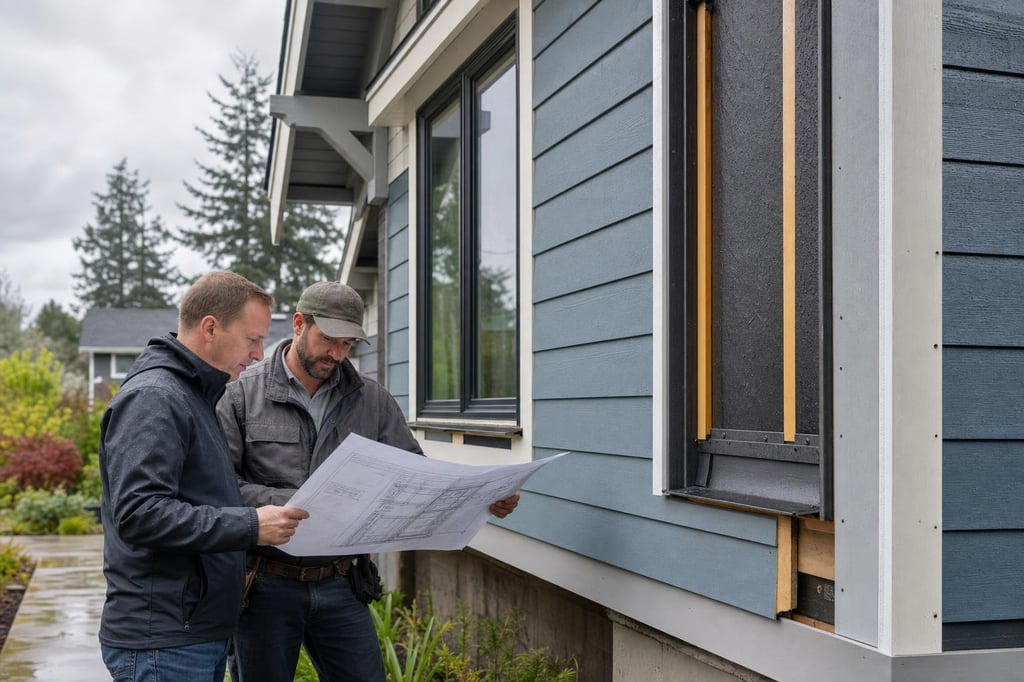
A rainscreen is not a single product; it is a wall assembly strategy that creates a drainage and ventilation gap behind siding. This allows incidental moisture to drain and helps wall components dry more effectively.
For Portland homes, a rainscreen approach may be worth discussing during exterior remodeling, window replacement, or additions, especially when updating older siding systems.
High-Quality Flashing and Weather Barriers
Flashing and weather-resistant barriers are critical in areas where roofs, walls, windows, doors, decks, and trim meet. These hidden components help direct water away from vulnerable transitions.
During a design-build remodel, Portland General Construction evaluates how these components work together instead of treating each material in isolation.
Interior Materials for Damp-Prone Spaces
Moisture-Resistant Drywall and Cement Board
Bathrooms, laundry rooms, mudrooms, and basement areas often require more careful material planning than dry living spaces. Moisture-resistant drywall can be appropriate for some damp areas, while cement board or other tile backer systems may be better suited for showers and tub surrounds.
The right choice depends on the room, the finish system, and local code requirements. Permitting and project oversight help ensure materials are used in the correct locations.
Porcelain and Ceramic Tile
Tile is a practical option for wet or damp areas, but performance depends heavily on substrate preparation, waterproofing, slope, grout selection, and transitions. A well-planned tile assembly can be attractive and durable in bathrooms, kitchens, laundry areas, and entryways.
Luxury Vinyl Plank and Engineered Flooring
For certain rooms, moisture-resistant flooring products such as luxury vinyl plank or properly selected engineered flooring can offer a balance of durability and design. Product quality, subfloor conditions, and installation method all influence performance.
In Portland home remodeling, flooring should be chosen with both moisture exposure and daily use in mind.
Kitchen, Bathroom, and Laundry Room Material Planning
Wet-area remodeling requires careful coordination between finishes, plumbing, ventilation, and structural conditions. Even premium materials can underperform if water management is not addressed behind the walls or under the floor.
Consider these moisture-resilient selections:
- Quartz or solid-surface countertops: Durable, non-porous surfaces that are well suited to busy kitchens and baths.
- Quality cabinet materials: Plywood boxes or moisture-tolerant materials may perform better than lower-grade alternatives in damp areas.
- Proper bath ventilation: Vent fans should be correctly sized and ducted to the exterior where required.
- Waterproofing membranes: Especially important in showers, wet rooms, and tiled bath assemblies.
- Sealed trim and transitions: Baseboards, casings, and thresholds should be selected and finished with moisture exposure in mind.
Basement and Lower-Level Remodeling in Portland
Basements and lower levels require special attention because they can be affected by groundwater, foundation conditions, condensation, and limited airflow. Before selecting finishes, it is important to understand the source of any dampness and address drainage or waterproofing needs where appropriate.
Materials to Discuss for Lower-Level Projects
- Moisture-tolerant flooring systems
- Insulation strategies appropriate for foundation walls
- Vapor control layers suited to the assembly
- Durable wall finishes designed for lower-level conditions
- Mechanical ventilation or dehumidification planning where needed
A qualified Portland general contractor can help coordinate construction services, specialty trades, permitting, and inspections for basement remodeling or additions.
Roofing, Decking, and Exterior Trim Considerations
Rain management does not stop at siding. Rooflines, gutters, decks, trim, and exterior penetrations all influence how moisture moves around a home.
During exterior remodeling or an addition, consider:
- Proper roof-to-wall flashing details
- Durable exterior trim materials
- Deck drainage and ledger flashing
- Gutter capacity and downspout placement
- Window and door integration with weather barriers
These details are especially important when tying new construction into an existing Portland home.
How Design-Build Supports Better Moisture Planning
A design-build approach can help homeowners make informed material choices earlier in the process. Instead of separating design decisions from construction realities, the design and construction teams work together to evaluate budget, performance, aesthetics, schedule, and code requirements.
For moisture-resilient remodeling, this can be especially valuable because material performance depends on how systems connect. Siding, windows, insulation, ventilation, flashing, waterproofing, and finishes all need to work as part of a complete assembly.
Questions to Ask Before Choosing Materials
Before finalizing selections for a remodel, addition, custom home, or commercial construction project, ask:
- Is this material appropriate for Portland’s rainy climate?
- How will the assembly drain, dry, and ventilate?
- What maintenance does the material require?
- Is the product compatible with the surrounding materials?
- Does the installation meet manufacturer requirements and local code?
- Will permitting or inspections affect the material choice?
These questions help keep the focus on long-term performance, not just appearance.
Work With Portland General Construction
Moisture-resilient remodeling starts with thoughtful planning, skilled installation, and reliable project oversight. Portland General Construction provides construction services for home remodeling, additions, custom homes, design-build projects, and commercial construction in Portland OR and Multnomah County.
Always verify licensing and project details prior to engagement. To discuss material choices and planning for your next construction project, contact Portland General Construction today. For practical next steps, Get info and talk with the team about timing, scope, and the right path for your situation.
Frequently Asked Questions
Good options often include fiber cement siding, properly detailed rainscreen assemblies, quality flashing, waterproofing membranes in wet areas, porcelain or ceramic tile, moisture-resistant drywall in appropriate locations, and durable flooring products selected for the room’s conditions. The best choice depends on the home, exposure, budget, and installation requirements.
A rainscreen can be worth discussing for exterior remodeling, siding replacement, or additions in Portland because it helps create a drainage and drying space behind the siding. It is not a substitute for proper flashing or installation, but it can be an important part of a moisture-management strategy.
Before choosing finishes, identify whether dampness is coming from exterior drainage, foundation conditions, condensation, plumbing, or ventilation issues. Practical considerations include moisture-tolerant flooring, appropriate insulation, vapor control, ventilation, and any permitting or inspection requirements.
No material can guarantee complete protection from water damage. Moisture-resilient materials can improve durability when paired with sound design, proper installation, drainage, ventilation, and ongoing maintenance. A licensed contractor can help evaluate the full assembly rather than only the visible finishes.
Design-build allows planning and construction expertise to be coordinated from the beginning. This helps align material selections with structural conditions, permitting, waterproofing, ventilation, budget, schedule, and project oversight, which is especially helpful in Portland’s rainy climate.