
Is Your Portland Home Ready for a Second-Story Addition?
A second-story addition can be a smart way to gain living space without expanding your home’s footprint. In Portland OR, where lot sizes, zoning requirements, and older housing stock can create design challenges, the first question is not simply what you want to build—it is whether the existing structure can support it.
Structural feasibility helps determine whether your home can safely accommodate an upper-level addition, what upgrades may be required, and how the project should move through design, engineering, permitting, and construction. Working with a knowledgeable Portland general contractor can help homeowners make informed decisions before committing to full plans.
What Structural Feasibility Means
Structural feasibility is the process of evaluating whether an existing home can support a proposed addition. For second-story additions, this review typically considers the home from the foundation up through the roof framing.
A feasibility review may include:
- Foundation condition and load-bearing capacity
- Framing layout, including beams, posts, joists, and bearing walls
- Roof structure and demolition requirements
- Seismic considerations and lateral stability
- Stair placement and floor plan impacts
- Utility routing for plumbing, electrical, and HVAC
- Local permitting requirements in Portland and Multnomah County
The goal is to understand the scope before the project advances too far into design or budgeting.
Why Portland Homes Require Careful Review
Many Portland homes were built decades ago under different building standards and with materials, layouts, and foundations that may not align with modern addition requirements. That does not mean a second-story addition is impossible, but it does mean the structure should be evaluated carefully.
Older Foundations and Framing
Some homes may have foundations, footings, or framing systems that need reinforcement before additional loads can be added. A licensed contractor working with qualified design and engineering professionals can help identify these conditions early.
Seismic and Lateral Load Considerations
Second-story additions change how a home responds to vertical and lateral forces. Structural planning may include shear walls, hold-downs, connectors, or other engineered elements to support code-compliant performance.
Zoning and Permitting Requirements
Portland permitting can affect building height, setbacks, design limitations, and review timelines. A design-build team can coordinate design decisions with permitting requirements so the addition is planned with practical construction services in mind.
Key Areas Evaluated Before Adding a Second Story
Foundation and Footings
The foundation must be reviewed to determine whether it can carry additional weight. If not, options may include reinforcement, new footings, or other engineered solutions. This is one of the most important parts of feasibility because it affects cost, sequencing, and constructability.
Load Paths
A second-story addition needs a clear path for loads to transfer from the new upper level down to the foundation. This may require aligning new walls over existing bearing walls, adding beams or posts, or modifying interior layouts.
Existing Roof Removal
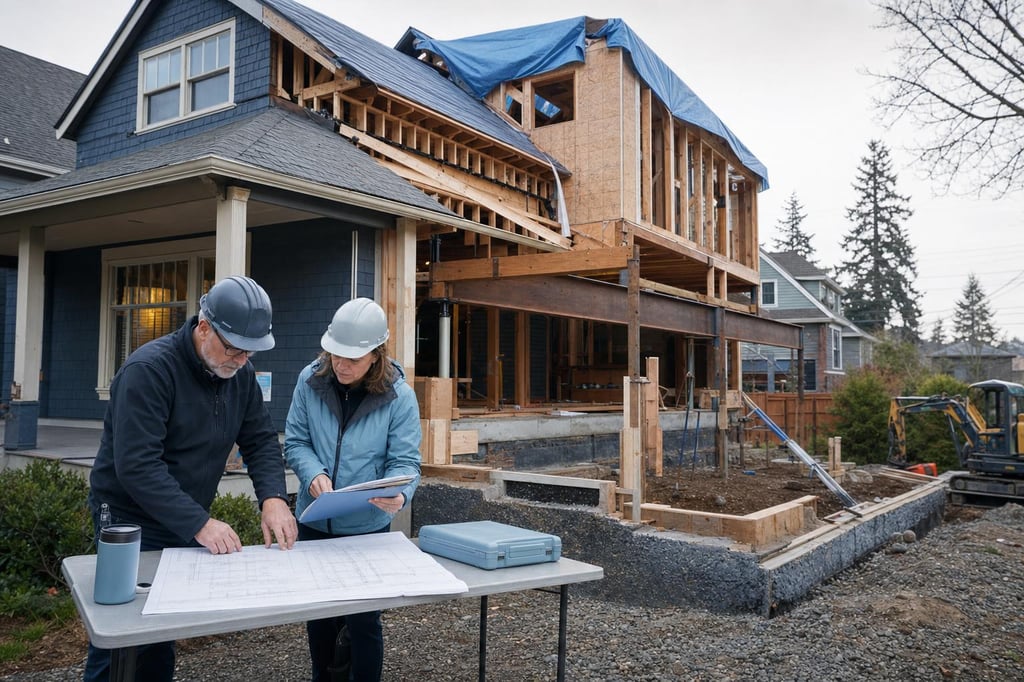
Many second-story additions require partial or full roof removal. Project oversight is especially important during this phase because the home must be protected from weather and the construction sequence must be carefully managed.
Stairs and Interior Flow
Stair placement affects both the existing floor plan and the new upper-level layout. A good feasibility study considers how circulation, headroom, structural openings, and daily use of the home will work together.
Utilities and Mechanical Systems
New bedrooms, bathrooms, laundry areas, or living spaces may require upgraded electrical service, plumbing routes, HVAC adjustments, and ventilation planning. These systems should be considered early, not after framing begins.
How a Design-Build Approach Helps
For complex additions, a design-build approach can improve coordination between design intent, structural requirements, permitting, and construction execution. Instead of separating planning from field realities, the team evaluates how the addition will actually be built.
For Portland General Construction, this means looking at the project as a complete process:
- Understanding homeowner goals and space needs
- Reviewing existing conditions before major design commitments
- Coordinating with engineers and design professionals as needed
- Planning for permitting requirements in Portland OR and Multnomah County
- Providing construction services with detailed project oversight
- Aligning home remodeling, additions, and custom homes expertise with practical buildability
What Happens During a Feasibility Assessment?
While every home is different, a typical second-story feasibility process may include:
- Initial consultation: Review goals, budget range, timeline, and desired scope.
- Site visit: Observe existing conditions, access, roof shape, foundation visibility, and structural layout.
- Preliminary structural review: Identify areas that may require engineering or reinforcement.
- Design direction: Evaluate layout options, stair placement, and how the new level connects with the existing home.
- Permitting strategy: Consider zoning, building code, and documentation needs before submittal.
- Scope refinement: Define what should be included in the next phase of planning and construction.
Common Feasibility Outcomes
A feasibility review does not always result in the same recommendation. Depending on the home, the team may determine that:
- The home appears suitable for a second-story addition with standard engineering review.
- The project is feasible, but foundation or framing upgrades are likely needed.
- A partial second-story addition may be more practical than a full upper level.
- A rear or side addition may better fit the site, structure, and budget goals.
- The design should be revised to improve load paths, stair placement, or permitting alignment.
These findings help homeowners move forward with clarity instead of assumptions.
Questions to Ask Before You Begin
Before planning a second-story addition, ask your contractor and design team:
- Has the existing foundation been reviewed for added loads?
- Will a structural engineer be involved?
- How will the project address Portland permitting requirements?
- What parts of the home may need reinforcement or modification?
- How will weather protection be handled during roof removal?
- Who will provide project oversight during construction?
- How will the addition affect existing utilities and living spaces?
Plan Your Second-Story Addition with Portland General Construction
Portland General Construction provides design-build, home remodeling, additions, custom homes, and commercial construction services with a detail-oriented approach to planning and execution. If you are considering a second-story addition in Portland OR or Multnomah County, our team can help you evaluate feasibility, understand permitting considerations, and plan the next steps with confidence.
Always verify licensing and project details prior to engagement. For practical next steps, View details and talk with the team about timing, scope, and the right path for your situation.
Frequently Asked Questions
Not every home is ready for a second-story addition without structural upgrades. The foundation, framing, load paths, roof structure, and code requirements should be reviewed before design and permitting move forward.
Most second-story additions require structural engineering input. An engineer helps determine how the added loads will be supported and what reinforcement may be needed for code-compliant construction.
Permitting can influence height limits, setbacks, structural documentation, energy requirements, and inspections. A design-build team can help coordinate drawings, engineering, and submittal requirements for the project.
A feasibility review typically looks at the foundation, footings, bearing walls, beams, joists, roof framing, stair location, utility routing, and access. The review may also identify areas where additional engineering or investigation is needed.
It depends on the lot, zoning, structure, budget, and homeowner goals. A second story can preserve yard space, while a ground-level addition may be more practical for some homes. A feasibility review helps compare options before full design begins.