
Can Your Business Stay Open During a Commercial Remodel?
For many businesses, closing during a remodel is not the preferred option. Lost operating time can affect customers, employees, tenants, and revenue. The good news is that with careful planning and experienced project oversight, many commercial construction projects can be phased so your business can continue operating while work is underway.
Whether you are updating a retail space, improving an office, renovating a restaurant, or reworking a tenant improvement in Portland OR or Multnomah County, the right approach starts with realistic scheduling, permitting awareness, and a clear construction plan.
Start With a Remodel Plan That Supports Daily Operations
Before construction begins, your Portland general contractor should help identify how the work will affect your business operations. This includes understanding customer flow, employee work areas, building access, utilities, deliveries, and safety requirements.
Key questions to answer before work starts
- Which areas of the business must remain accessible at all times?
- Can work be completed in phases by section, floor, suite, or department?
- Will any utilities, restrooms, entrances, or exits be temporarily affected?
- Are there lease requirements, landlord approvals, or tenant rules to follow?
- What permitting or inspection steps could affect the schedule?
- How will customers and employees be notified about changes?
A design-build approach can be especially helpful because planning, design coordination, budgeting, and construction services are aligned earlier in the process. This can reduce confusion and help the remodel plan account for real-world business needs.
Use Phasing to Limit Disruption
Phasing is one of the most effective ways to keep a business open during a commercial remodel. Instead of renovating the entire space at once, the project is divided into manageable sections so operations can shift as each phase is completed.
Common phasing strategies
- Zone-by-zone remodeling: Work is completed in one area while the rest of the space remains operational.
- After-hours or weekend work: Certain tasks may be scheduled outside peak business hours when appropriate and allowed.
- Temporary customer paths: Entrances, checkout areas, or service counters may be adjusted to maintain access.
- Temporary workspaces: Employees may be relocated within the space during specific phases.
- Staged deliveries: Materials arrive when needed to reduce clutter and improve site safety.
Not every project can remain fully open from start to finish, especially if major structural work, utility shutoffs, or life-safety upgrades are involved. However, a detailed phasing plan can often reduce downtime and help set realistic expectations.
Prioritize Safety for Customers, Employees, and Crews
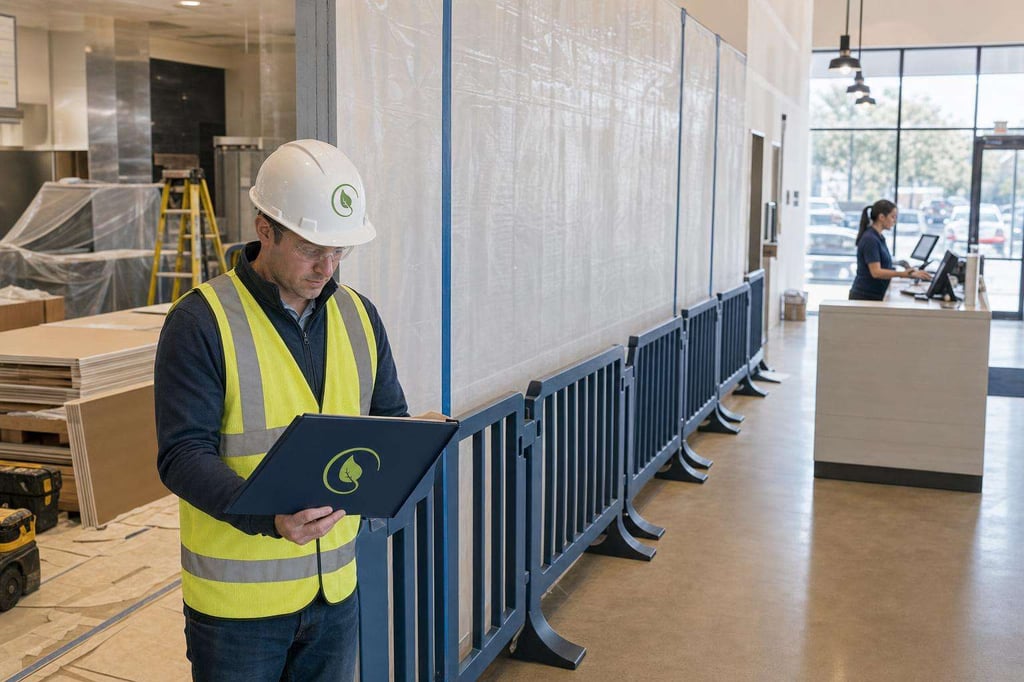
When construction and business operations happen at the same time, safety planning is essential. A licensed contractor should coordinate barriers, signage, work zones, dust control, access routes, and emergency exits so the site remains as organized as possible.
Safety items to discuss with your contractor
- Clear separation between public areas and active construction zones
- Temporary walls, barricades, or partitions where needed
- Dust, noise, and debris management
- Safe paths for customers, employees, and deliveries
- Protection for existing finishes, equipment, inventory, and furnishings
- Coordination with building management, neighboring tenants, and inspectors
Always verify licensing and project details prior to engagement, and make sure responsibilities are clearly documented before work begins.
Plan Around Permitting and Inspections
Permitting can influence the schedule of a commercial remodel, particularly when the work involves structural changes, electrical systems, plumbing, mechanical systems, accessibility upgrades, occupancy changes, or fire and life-safety requirements.
An experienced commercial construction team can help identify which approvals may be required and how inspections may affect project sequencing. While no contractor can guarantee agency timelines, early planning can help reduce avoidable delays and keep the project moving in the right order.
Communicate Early and Often
Communication is one of the most important parts of keeping a business open during a remodel. Your contractor should provide regular updates so you understand what is happening, when work areas will shift, and what temporary adjustments may be needed.
Helpful communication practices
- Maintain a shared project schedule with upcoming milestones
- Identify a primary point of contact for business decisions
- Notify employees before access routes or work areas change
- Post customer-facing updates when entrances or service areas are affected
- Coordinate noisy or disruptive tasks around business priorities when possible
- Document changes to scope, schedule, or site conditions
Good communication helps reduce surprises and allows your team to keep customers informed throughout the remodel.
Protect Your Brand Experience During Construction
Even during construction, customers should feel that your business is organized and prepared. Temporary signage, clean pathways, clear instructions, and professional site management can make a noticeable difference.
For customer-facing spaces, consider how the remodel will affect first impressions. A well-managed site reflects positively on the business and helps customers understand that improvements are underway.
Work With a Contractor Who Understands Commercial Operations
Commercial remodeling is different from home remodeling, additions, custom homes, or other residential construction services because business continuity is often a central concern. Your contractor should understand how to balance construction needs with customer access, employee productivity, tenant coordination, and code requirements.
Portland General Construction provides design-build, remodeling, additions, custom homes, and commercial construction support with a detail-oriented approach to planning and project oversight. For businesses in Portland OR and Multnomah County, working with an experienced Portland general contractor can help align the remodel plan with both construction requirements and operational needs.
Ready to Plan a Commercial Remodel With Less Disruption?
If you are preparing to update your business space, Portland General Construction can help you evaluate phasing, permitting, scheduling, and construction logistics. Contact us today to start your construction project. For practical next steps, View details and talk with the team about timing, scope, and the right path for your situation.
Frequently Asked Questions
In many cases, yes, but it depends on the scope of work, building conditions, permitting requirements, utility impacts, and safety needs. A contractor can review your space and recommend whether phased construction, after-hours work, temporary access routes, or partial closures are appropriate.
Tenants should review lease requirements, confirm landlord approval, identify building rules, and coordinate with property management before construction begins. It is also helpful to document operating hours, customer access needs, delivery routes, and any shared spaces that may be affected.
Phasing means dividing the project into planned sections so work can happen in one area while other areas remain usable. For example, a retail space may remodel one zone at a time, or an office may temporarily relocate staff while each section is completed.
Permitting and inspections can affect the sequence and timing of a remodel, especially when work involves structural changes, electrical, plumbing, mechanical systems, accessibility, or life-safety components. Your contractor should help identify likely permit needs early so the schedule can be planned accordingly.
Customers should know whether your business is open, where to enter, which services are available, and whether hours or access have changed. Clear temporary signage, website updates, social posts, and staff talking points can help reduce confusion during the remodel.