Adaptive Reuse Construction in Portland: A Practical Path for Older Buildings
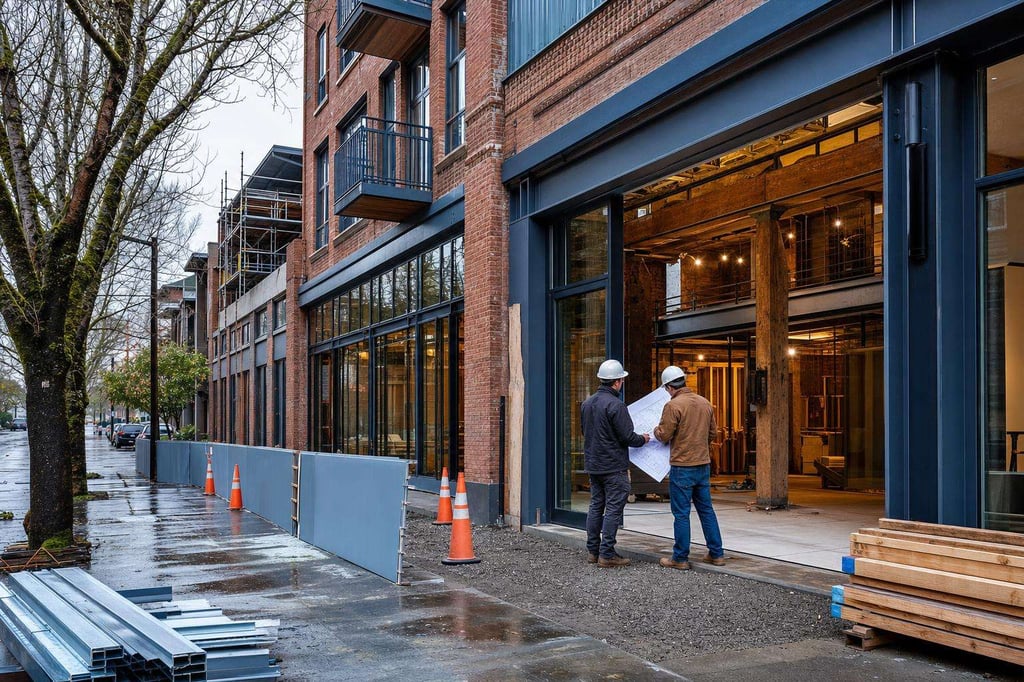
Portland has a deep inventory of older commercial, industrial, and residential structures with strong architectural character. Adaptive reuse construction focuses on giving these buildings a new purpose, such as converting an underused office, warehouse, or retail property into modern residential units, live-work spaces, or mixed-use space.
For property owners, developers, and investors in Portland OR and Multnomah County, adaptive reuse can be a smart way to preserve existing value while updating a building for current codes, tenant needs, accessibility, energy performance, and long-term usability. It also requires careful planning, professional project oversight, and a knowledgeable Portland general contractor who understands both existing conditions and new construction requirements.
What Is Adaptive Reuse Construction?
Adaptive reuse is the process of renovating an existing building for a new use that may differ from its original purpose. Unlike standard home remodeling or commercial construction, adaptive reuse often involves changing occupancy type, updating life-safety systems, reworking layouts, and coordinating permitting requirements tied to the new use.
Common adaptive reuse examples in Portland
- Converting older commercial buildings into residential apartments or condominiums
- Transforming warehouse or light industrial spaces into creative offices with ground-floor retail
- Updating historic or character-rich properties for mixed-use occupancy
- Reconfiguring former retail or office space into live-work units
- Adding residential space above or behind existing commercial storefronts where zoning allows
Why Adaptive Reuse Appeals to Portland Property Owners
Many older buildings offer qualities that are difficult to replicate in new construction, including established locations, mature neighborhood context, durable structural materials, and distinctive design details. Adaptive reuse construction can help align those strengths with modern expectations.
Potential benefits of adaptive reuse
- Preserving architectural character: Original masonry, heavy timber, storefront details, or unique building proportions can become defining features of the finished space.
- Improving function: Updated layouts, building systems, accessibility improvements, and tenant-focused planning can make an older structure more usable.
- Supporting mixed-use opportunities: Many Portland corridors benefit from buildings that combine housing, retail, office, or community-serving space.
- Making use of existing infrastructure: A careful assessment can identify which structural, utility, and envelope elements may be retained, upgraded, or replaced.
- Creating marketable spaces: Tenants and residents often value authentic materials, walkable locations, and modern amenities in older buildings.
Key Planning Considerations Before Construction Begins
Adaptive reuse projects succeed when the team evaluates the building thoroughly before major design and construction decisions are made. A design-build approach can be especially valuable because it connects planning, budgeting, permitting, and construction services early in the process.
Existing building conditions
Older buildings may have hidden conditions that affect the scope of work. A qualified team should review structural systems, roof and envelope performance, mechanical, electrical, and plumbing systems, fire/life-safety requirements, accessibility, and possible environmental considerations before finalizing a plan.
Zoning and occupancy changes
Changing a building from one use to another may involve zoning review, building code analysis, change-of-occupancy requirements, and coordination with the City of Portland or other authorities having jurisdiction. Permitting should be addressed early so the design reflects what can be approved and built.
Tenant and resident needs
Residential and mixed-use spaces must be designed around the people who will use them. That can include unit layouts, common areas, storefront access, sound control, privacy, egress, loading, bike storage, accessibility, and separation between commercial and residential functions.
Budget alignment and phasing
Adaptive reuse construction can involve unknowns, so owners benefit from realistic budgeting, clear allowances, and phased decision-making. A contractor with strong project oversight can help identify cost drivers and sequence work to reduce avoidable disruptions.
Where Design-Build Adds Value
With design-build, the design and construction team collaborates from the early planning stage. For adaptive reuse, this can help owners make informed choices before documents are finalized and permits are submitted.
Design-build support may include
- Preconstruction walk-throughs and feasibility input
- Coordination with architects, engineers, and specialty consultants
- Constructability review for proposed layouts and systems
- Budget guidance as the scope develops
- Permitting coordination and documentation support
- Scheduling, subcontractor coordination, and field management
- Quality-focused construction services through completion
Whether the project involves commercial construction, additions, home remodeling, or a broader mixed-use conversion, early collaboration helps connect design intent with practical construction realities.
Construction Challenges Common in Older Portland Buildings
Adaptive reuse work often requires a different level of coordination than building on a clear site. The contractor must balance preservation, code compliance, modern performance goals, and the realities of working within an existing structure.
Common challenges to plan for
- Structural upgrades: New use, seismic considerations, or added loads may require engineering review and reinforcement.
- Building envelope improvements: Windows, walls, roofs, and moisture management may need upgrades for comfort and durability.
- Mechanical, electrical, and plumbing updates: Residential and mixed-use conversions often require new or substantially modified systems.
- Fire and life-safety systems: Egress, alarms, sprinklers, separations, and rated assemblies may be part of the code path.
- Accessibility requirements: Entries, routes, restrooms, units, and common areas may need updates depending on the use and scope.
- Tenant coordination: If portions of a property remain occupied, construction sequencing and communication become especially important.
Choosing the Right Portland General Contractor
The right partner for adaptive reuse should bring more than building experience. Look for a licensed contractor with strong communication, detailed project oversight, and experience coordinating design, permitting, and construction teams.
Questions to ask before hiring
- Have you worked on older buildings or change-of-use projects in Portland OR or Multnomah County?
- How do you approach preconstruction discovery and existing-condition reviews?
- How do you coordinate with architects, engineers, consultants, and permitting agencies?
- What is your process for managing scope changes when hidden conditions are uncovered?
- How do you communicate schedule, budget, and field updates during construction?
Always verify licensing and project details prior to engagement. A transparent contractor should be willing to discuss qualifications, relevant experience, insurance, and the process for moving from early planning to construction.
How Portland General Construction Can Help
Portland General Construction supports owners with design-build construction, custom homes, remodeling, additions, and commercial construction throughout the Portland area. For adaptive reuse projects, our team focuses on practical planning, clear communication, and detail-oriented construction management from concept through completion.
If you are evaluating an older building for residential or mixed-use potential, Portland General Construction can help you understand the construction path, coordinate the right team, and move forward with confidence.
Start your adaptive reuse project
Contact Portland General Construction today to start your construction project. For practical next steps, Get info and talk with the team about timing, scope, and the right path for your situation.
Frequently Asked Questions
Adaptive reuse often changes how a building is used, such as converting a commercial property into residential units or mixed-use space. That can trigger additional review for zoning, occupancy, fire/life-safety, accessibility, structural systems, and permitting. A standard remodel may update finishes or layouts without changing the building’s primary use.
Possibly, but it depends on zoning, building condition, code requirements, access, utilities, structural capacity, and the intended occupancy. A feasibility review with a design-build team, architect, and relevant consultants can help determine whether the project is practical before major design work begins.
Tenant context is important because residential, commercial, and mixed-use occupants have different needs. The plan may need to address separate entrances, sound control, privacy, common areas, restrooms, accessibility, deliveries, storage, egress, and building system separation. If existing tenants remain during construction, phasing and communication are also critical.
Owners should review the proposed use, zoning requirements, existing structural conditions, mechanical/electrical/plumbing capacity, fire and life-safety needs, accessibility requirements, environmental considerations, and budget assumptions. Early coordination with experienced professionals can help align the design with the permitting path.
A licensed contractor with design-build experience can provide early constructability input, coordinate with architects and engineers, support permitting discussions, manage subcontractors, and oversee construction details. Always verify licensing and project details before engagement.